How Jadhu
works.
A free assessment. A new plan every morning. Two 30-minute sessions every day.
Jadhu works in two layers simultaneously. The foundational layer builds core neuro-developmental skills — attention, cognition, communication, motor, sensory. The application layer practises those skills in real-world situations. Every session combines both.
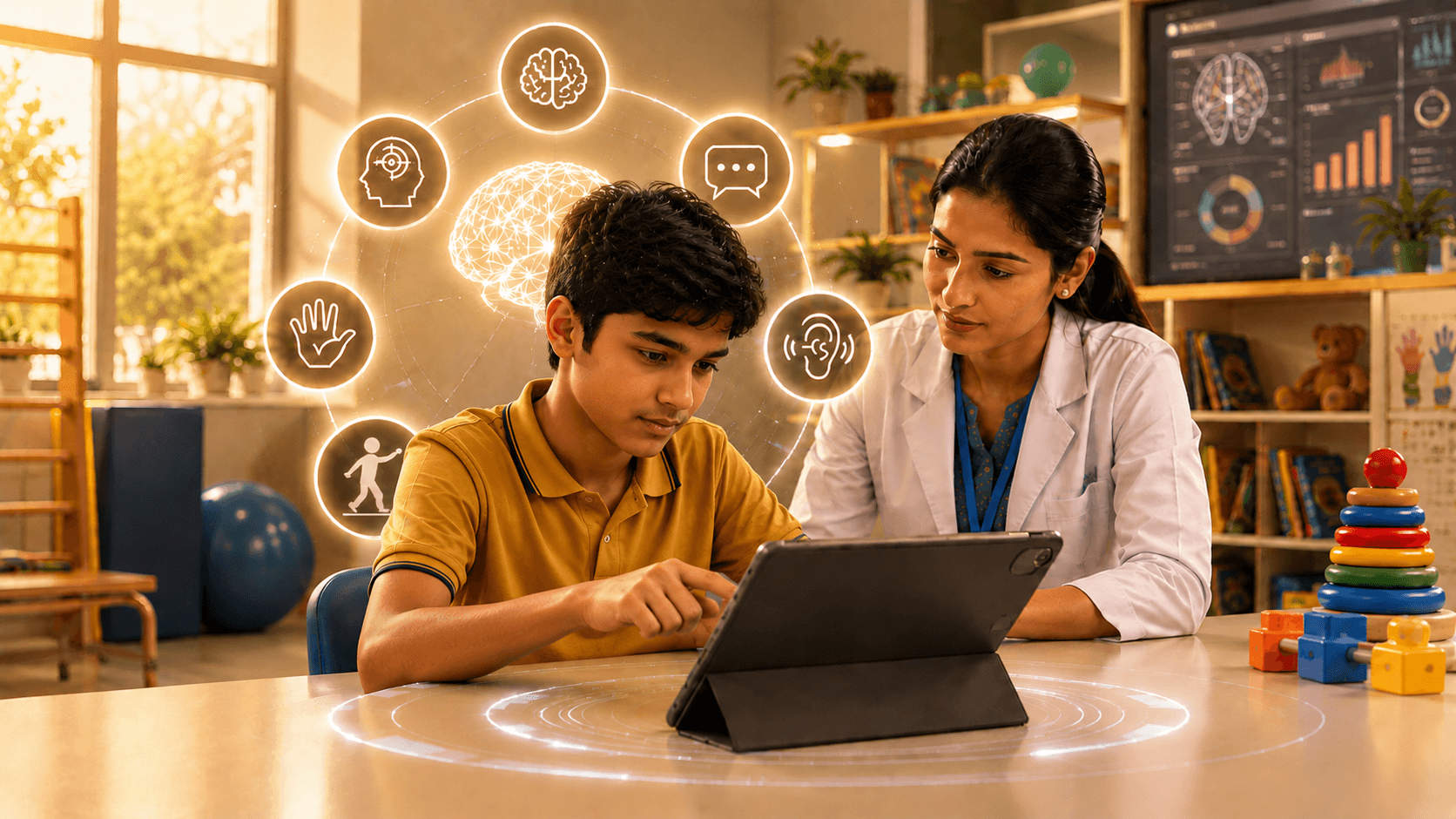
Understand in 8 minutes.
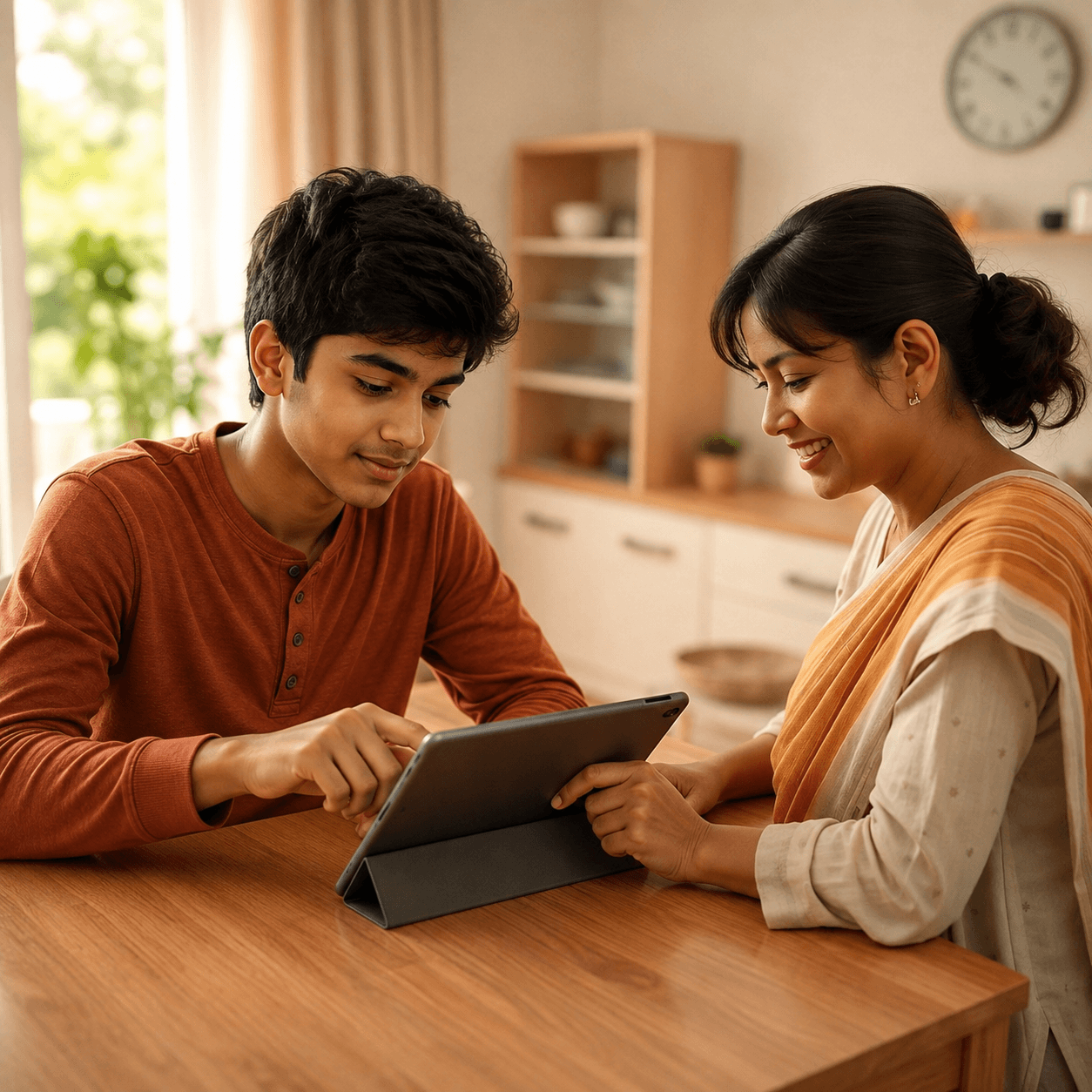
The learner plays 8 short games on their phone or tablet — 40 seconds each. Each game measures one of Jadhu's 9 foundational domains. They wear the Jadhu wristband throughout — tracking anxiety in real time so the platform knows not just what they can do, but when they are ready to learn.
A full profile is ready within minutes — foundational skill levels, anxiety pattern, and a personalised first daily plan.
The 9 foundational domains, measured
What each game measures, and where it lives inside the assessment.
Cognition & Memory
Attention, working memory, problem solving, sequencing
Communication
Receptive language, gesture, expressive communication
Activities of Daily Living
Self-care, dressing, grooming, morning routines
Social & Emotional
Turn-taking, emotional recognition, peer interaction
Visual Perceptual
Discrimination, closure, integration, visual memory
Motor Development
Gross motor: balance, coordination · Fine motor: grasp, precision
Focus & Attention
Sustained attention, response time, distraction resistance
Sensory Regulation
Auditory, visual, social-crowd tolerance · multi-sensory integration
Learning & Academics
Reading readiness, number sense, instruction following
How real-world scenarios work
Every real-world scenario simultaneously embeds graded demands across multiple foundational domains. The restaurant scenario requires visual perception (reading a menu), cognition (sequencing), social-emotional skills (waiting, interacting), and motor skills (using cutlery). The prescription engine tracks progress per embedded domain — not just whether the scenario was completed.
A new plan, every morning.
Every morning, Jadhu builds both sessions for the day — based on the learner's foundational profile, condition, severity level, age band, and yesterday's performance.
"No two learners ever get the same plan."
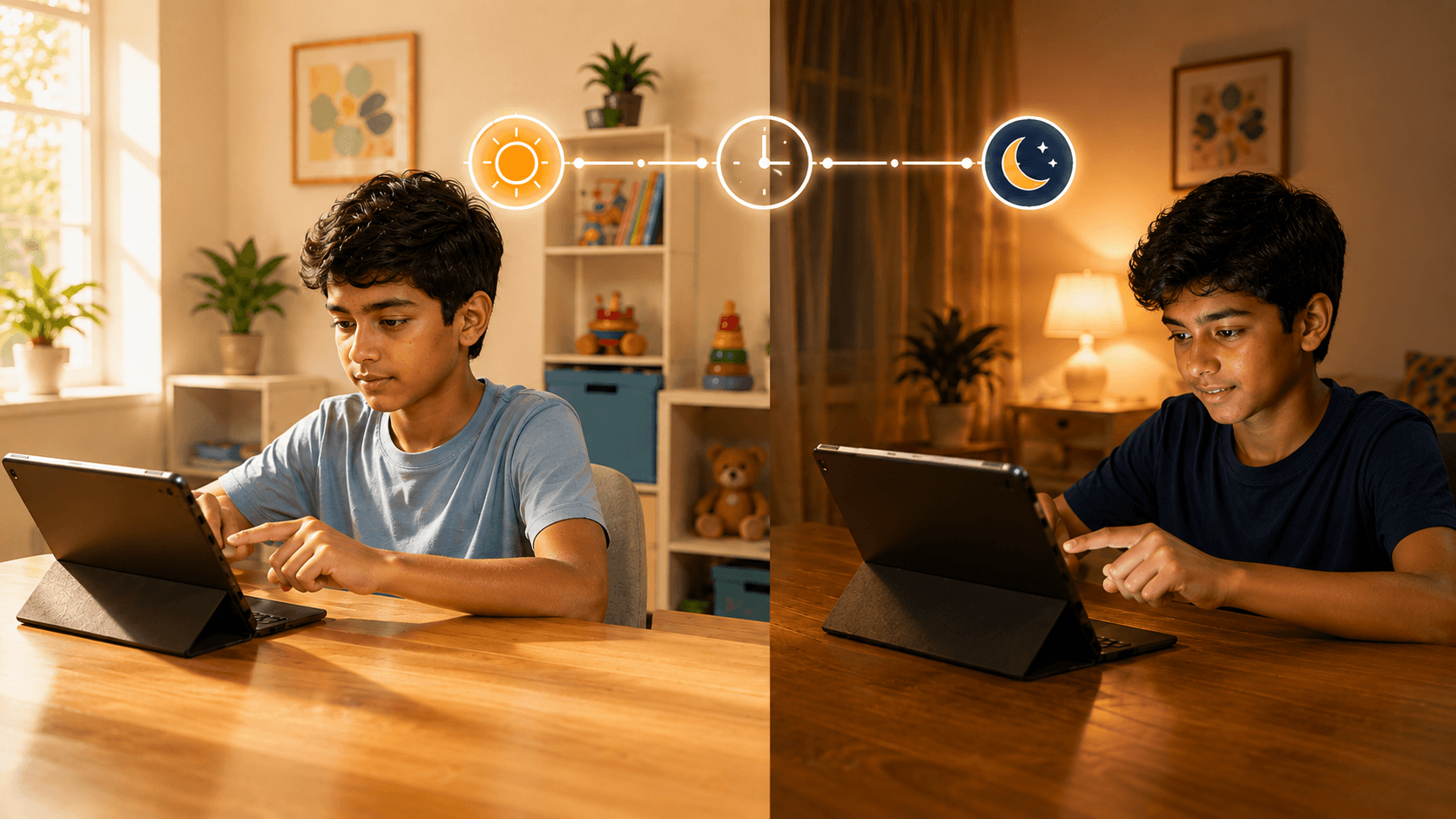
The plan focuses on foundational skill building first — establishing the domains a real-world situation would otherwise ask too much of.
The plan prioritises real-world application — putting established foundations to work in the situations that matter day to day.
Both pathways are personalised daily.
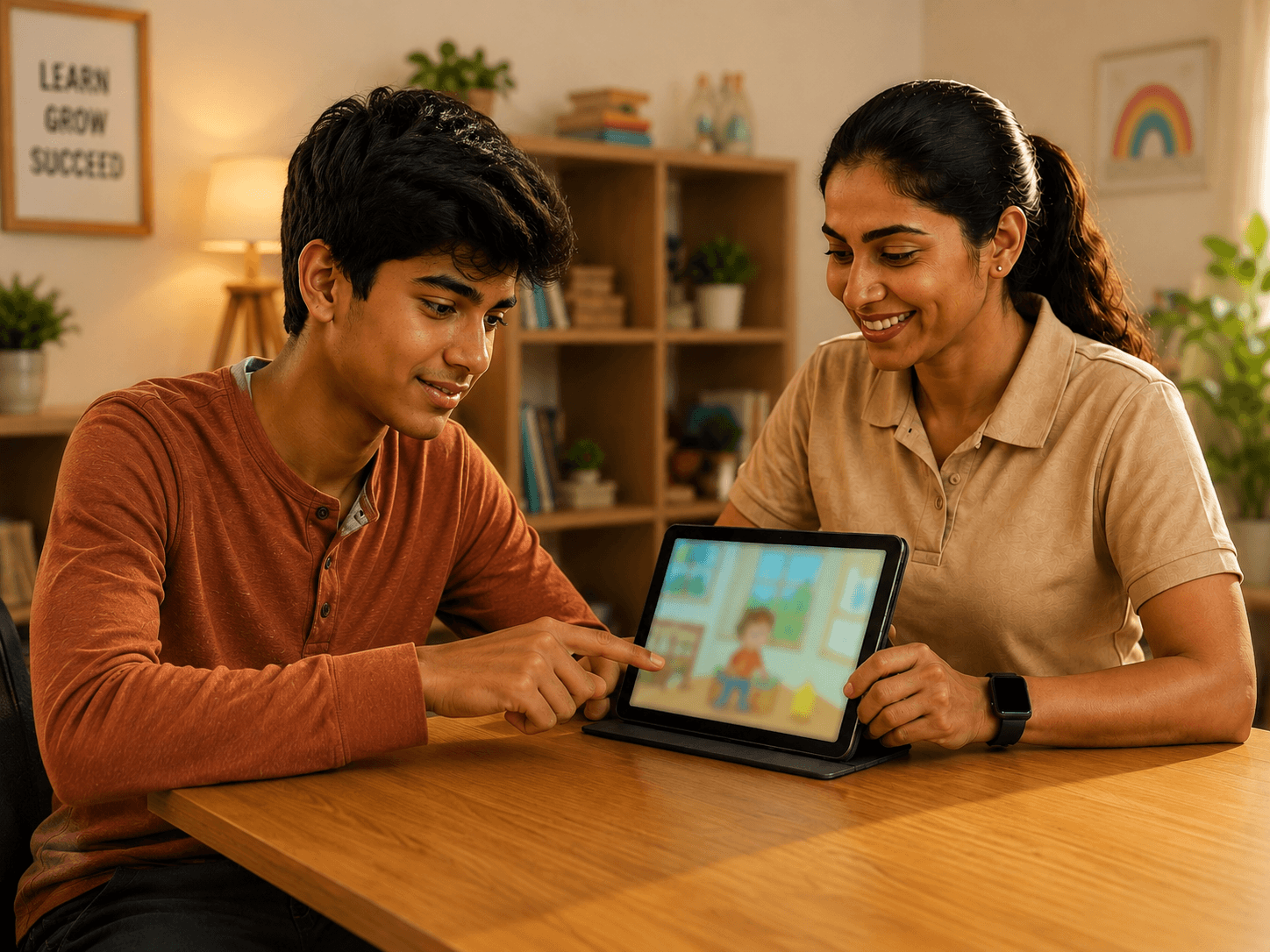
Two 30-minute sessions, every day.
After both sessions: a WhatsApp daily summary — what was practised across both sessions, wristband highlights, skill progress across all 9 domains, and tomorrow's plan.
Morning session
45 minReal-world situation
~10 minA D8 scenario — school, restaurant, metro, clinic, workplace. Graded by foundational domain difficulty. Mobile or VR.
Foundational skill game
~10 minTargets the key domain gap for today's situation — drawn from D1–D8 based on the learner's profile.
Home activity
~5 min · off-screenParent and learner together. Reinforces the day's foundational skill in real life, away from the screen.
Evening session
45 minReal-world situation
~10 minA new or revisited scenario at higher difficulty. The prescription engine never repeats the same scenario in the same day.
Foundational skill game
~10 minA different domain game — the engine ensures variety across both sessions each day.
Home activity
~5 min · off-screenA second off-screen activity — reinforcing the evening session's skill.
Total screen time: ~45 minutes a day across 2 sessions — well within WHO guidelines. Both home activities are off-screen.
Three ways to experience Jadhu.
The same 9 foundational domains. The same real-world situations. The same personalised daily plan — across three progressively immersive modes.
 1
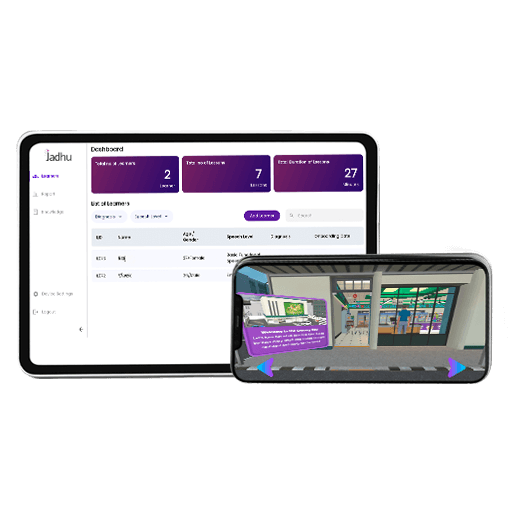
1Mobile
Jadhu on your smartphone or tablet. Interactive 3D scenarios on screen. Tap and drag to navigate real-world situations.
For: All B2C subscribers. The standard daily platform.
Available now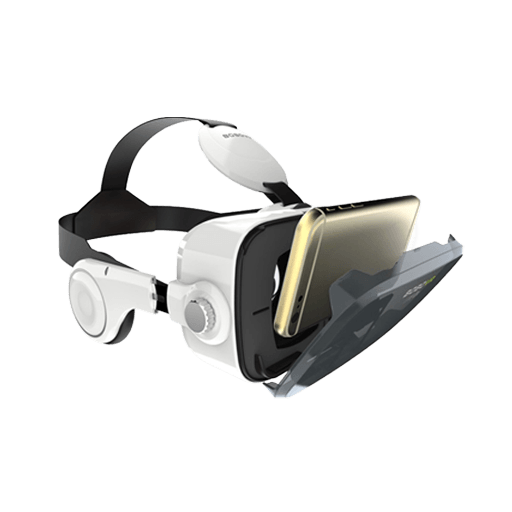 2
2Jadhu Viewer
~₹800–1,200
Your smartphone slides into a lightweight holder. The same situations become a 360° immersive environment. No expensive hardware — just your phone.
For: Families wanting more immersion than flat-screen without clinical VR cost.
Coming soon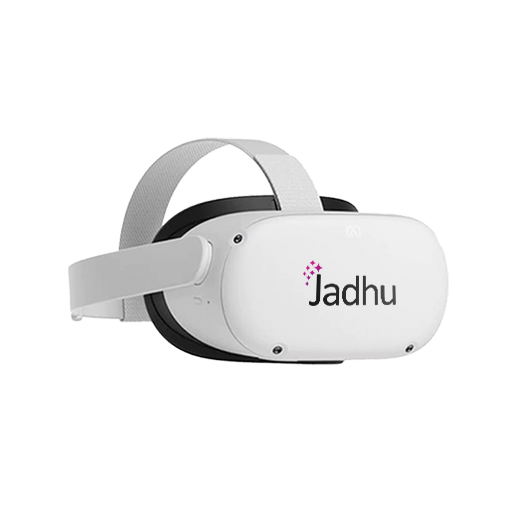 3
3Meta Quest — Clinical VR
Full room-scale VR. Live at PSG Hospitals, SRM, Sri Ramachandra, and Swabhimaan Trust. Complete sensory profile, real-time HR overlay on therapist’s tablet.
For: Therapy clinics, hospitals, and families whose therapist recommends clinical-grade VR.
Available now · B2B + homeThe content is identical across all three modes. The difference is immersion. The prescription engine runs the same personalised plan regardless of which mode the learner uses.
All severity levels — how the platform adapts.
Mild
Real-world independence is the primary focus. Foundational skills largely established. Community, social, and vocational situations practised with reducing prompts.
Moderate
Foundational skill gaps addressed alongside real-world practice. Session balance: 50% domain games + 50% situational scenarios.
Severe
Primary focus: foundational skill building — ADL, cognition, communication, sensory regulation. Real-world scenarios used at basic difficulty for generalisation.
Profound
Foundation-first. Every session targets core developmental domains — attention, sensory tolerance, ADL, basic communication. Environmental exposure through scenarios.
Free · No card · Personalised from Day 1

Loading...